Art Deco History
Some links from this site lead to third parties who pay us a commission if you buy something. This allows us to keep providing the information on this site free of charge!
Art Deco history has its roots in Paris in the first decades of the 20th Century.
It began as a reaction against the soft, flowing, floral organic lines of Art Nouveau which was popular at the turn of the century. Designers and artists started using clean straight lines, and bold colours, as opposed to the pastels and curlicues of Art Nouveau.
 Photo by Scott Beveridge (rollerboy76) Sydney
The Cubists introduced two dimensional, geometric form and bold colours as early as 1907, and this had a dramatic impact on the history of Art Deco design.
Architects such as Charles Rennie Mackintosh and Frank Lloyd Wright had already moved away from the Victorian styles of architecture by the beginning of the century and their modernist buildings were also a strong influence on the development of a new architecture.
Read about Art Deco Architecture - Streamlined or Skyscrapers?
Why Was Art Deco Influenced by Ancient Egypt?
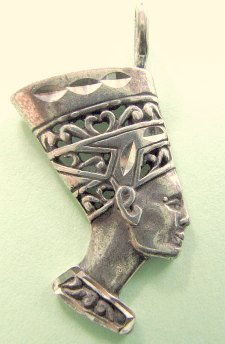
Tuthankhamum's tomb was discovered in 1922 by Howard Carter, and everyone went Egypt mad!
The stepped pyramids, the scarab beetle, big gold tone collars, columns, and bright colours all became part of the new look and dramatically influenced the progress of Art Deco history.
The Importance of Fashion
The world of fashion was one of the most important driving forces in Art Deco design, as never before had fashion undergone such a transformation as it did in the 1920s. After WWI women were more independent, and part of the work force. They wanted clothes which were practical as well as glamourous, and which did not restrict their lifestyles.
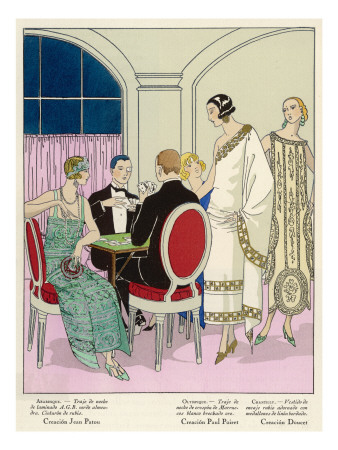 Print of Fashions by Jean Patou, Poiret and Doucet
Designers such as Coco Chanel embraced the clean, uncluttered, classic straight lines, while Paul Poiret catered for the dramatic, and the exotic tastes of women who wanted to make an impact and was strongly influenced by the oriental and the Ballet Russes.
Explore the beautiful world of Art Deco Fashion
The Ballet Russes were an enormous influence on European artists and designers, including Picasso.
All of these influences came together at the 1925 Paris "Exposition Internationale des Arts Décoratifs et Industriels Modernes" which gave Art Deco its name.
This was a showcase of the best that Paris designers could offer. Interior design and furniture by Jacques Emile Ruhlmann, a huge glass fountain, panels, jewellery and glass by Lalique, Silver by Puiforçat, a barge full of fabulous home furnishings as well as fashion by Paul Poiret, textiles by Sonia Delaunay poster design by Robert Bonfils, ironwork by Brandt, jewellery by Cartier.
These are just a few of the big names that adorned the great Expo that was so long in the making.
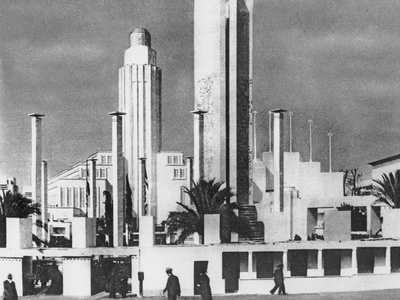 Pavilions at the 1925 Paris Expo
When Did The Name "Art Deco" Start Being Used?
The name was never used until the 1960s when the designs of the 1920s and 30s enjoyed a revival in popularity.
The designs which had in the 1930s become mass produced and were in every home had been regarded as throw away and somewhat kitch in the 1950s. By the 1960s societies sprung up to preserve the buildings of the time, and the objects that had been discarded in the 40s and 50s became collectable.
But until then the design of the era was known by a wide range of titles such as Art Moderne, Jazz Age, Machine Age, Streamlined, Cubist, or Expressionist.
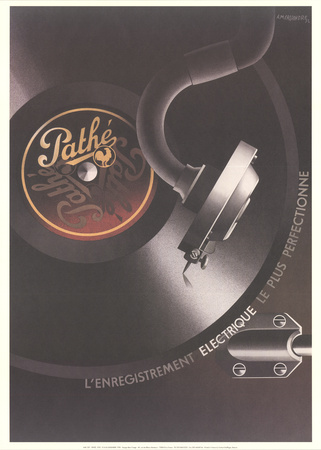 Pathe by Cassandre
Art Deco History Books
It was Bevis Hiller who wrote the first book on Art Deco history and design in 1968 and was most likely the first to use the term to describe the style of the 1920s and 30s.
Nowadays, the style is
understood to have begun around 1910 and continued until 1939 and the
outbreak of WWII. It encompasses the geometric, the exotic, the
streamlined designs of the machine age and much more which is so
difficult to describe, but so obvious when you see it.
A
mountain of Collectors guides and books has now been written analysing
the influences which came together during the history of Art Deco, which
has really been a dominant style for most of the 20th Century.
Decolish has it's own bookshop - click here to browse.
Etsy has a surprisingly good range of Art Deco furniture, interior decor, art and prints, 1920s and 1930s fashion, accessories, jewellery and Bakelite. Click the banner to explore.
Join our Facebook Page so you never miss a thing!
Decolish Home > Art Deco Style > Art Deco History
Like this Page
- Decolish Home
- Art Deco History
Recent Articles


-
Edward Mcknight Kauffer - Painter, Poster Artist, Rug Designer
 The Story of E. Mcknight Kauffer, a lesser known, but hugely important Art Deco poster artist. See his works and learn more. . .
 -
Art Deco Engagement Rings - We Help you Choose the Best
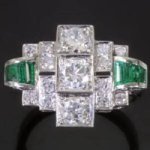 Find exquisite Art Deco Engagement rings to buy for all budgets....beautiful and a great investment too.
 -
Art Deco - Antiques of the Future
 Why Art Deco Will Become Antiques Very Soon - What to Look for and How to Buy them.
Etsy has a huge range of Art Deco as well as 1920s and 1930s Fashion. Check them out!
Copyright Lesley Postle 2009-2024 Decolish.com
Privacy Policy | Affiliate Disclaimer | POWered by Solo Build It
