Art Deco Artists - Who Were They?
Some links from this site lead to third parties who pay us a commission if you buy something. This allows us to keep providing the information on this site free of charge!
Discover some of the most important Art Deco Artists from the 1920s and 1930s and their works. For information about the various artists, click on the links or see below.
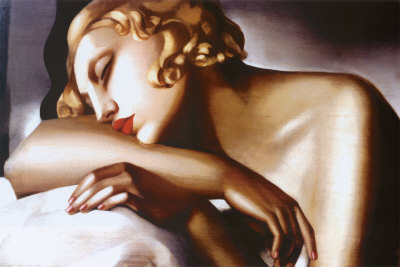
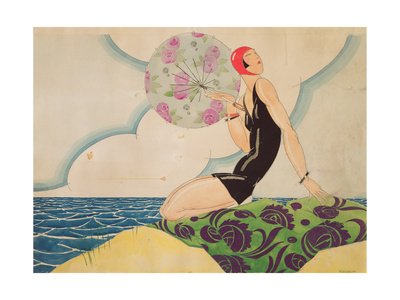
Art Deco Artists" is not a term with which any of the above artists of the early 20th century would have been familiar.
The term Art Deco didn't come into use until the 1960s when it was adopted as a term to describe the style of decorative arts which was celebrated at the 1925 Paris Exhibition "L'Exposition Internationale des Arts Décoratifs et Industriels Modernes".
However, the avant-garde painters, sculptors and artists of the time had an enormous influence on the style we came to know as Art Deco.
Among the artistic movements of the time: Fauvism, Cubism, Futurism, Dadaism, Surrealism, Bauhaus, all of these were to have a profound influence on Art Deco posters, the decorative arts, fashion, and architecture of the Machine Age.
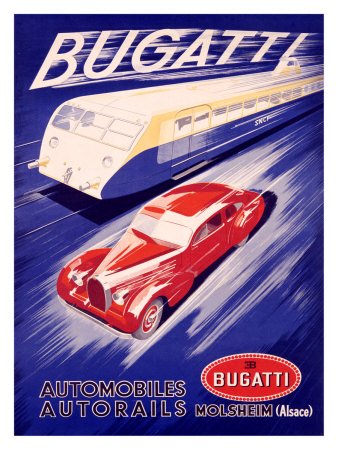
A statement made in the Futurist manifesto of 1910 gives us a taste of the ethos of the Art Deco era which desired "to express the vortex of modern life - a life of steel, fever, pride and headlong speed".
Cubist Artists
The new century brought enormous change in the field of art. The soft focus and the pastel colours of the Impressionists and the Art Nouveau movements were replaced by brash colours, the strong functional lines of the Machine Age and a tendency towards the abstract.
Cubism with its straight lines and flat, two dimensional forms was perhaps the greatest influence on Art Deco Artists.
Paris was a hotbed of the avant-garde with the radical new artists such as Fernand Leger, Robert Delaunay, Jean Metzinger and Albert Gleizes banding together to exhibit at the Salon d'Automne.
Their Cubist exhibitions created an uproar, and may not have been popular amongst the general public, but had a lasting effect of the style of the age, filtering down into the more commercial arts of poster design, advertising, fashion and architecture.
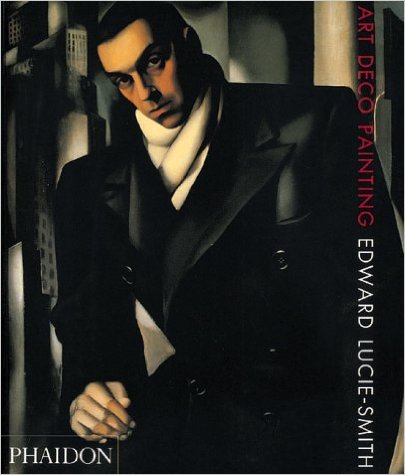
Read more about Art Deco Painting in this excellent book by Edward Lucie-Smith.
Bauhaus
Controversial and regarded by the right-wing as depraved and degenerate, Cubism as a movement was all but over by WWI, with the artists dispersing and many moving on to new ideas.
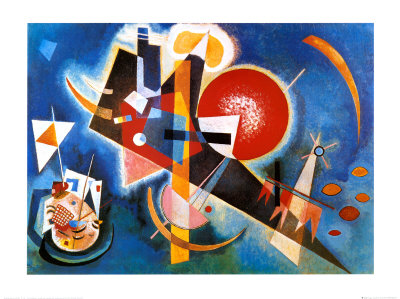
Many Artists of the Art Deco period, passed through the Weimar Bauhaus. Founded in 1919, for 14 years it was a clearing house for many of the foremost artists, painters, designers and architects of the period. Paul Klee, Kandinsky, Moholy-Nagy and Mies van der Rohe are a few examples of the greats who went through this school.
The work produced there reflected the obsession with form and functionality, the rational and the machine, and blurred the traditional boundaries between areas of design, art and craft, and architecture.
De Stijl
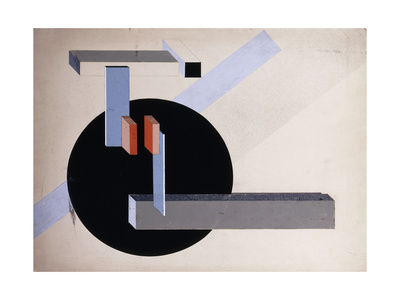
Closely related to the Bauhaus was the De Stijl movement in the Netherlands led by Piet Mondrian, and the Russian School "Vhutkemas" where El Lissitzky was a teacher.
El Lissitzky was one of the Russian born Art Deco artists, a designer, typographer, photographer and architect, he worked closely with the Bauhaus and De Stijl schools. He made significant advances in the art of typography and worked in book and periodical design. He produced many posters, some for the Russian propaganda machine.
Better Known Art Deco Artists
There are a number of artists who were well-known at the time, and perhaps reflect the Art Deco style more closely than the better known avant-garde giants.
Jean Dupas painted murals for Emile Jacque Ruhlmann's pavillion at the 1925 Paris Exhibition, and many murals and screens for the "Normandie". They were rich and exotic and great examples of the Art Deco Style.
Tamara De Lempicka - A Famous Female Art Deco Artist
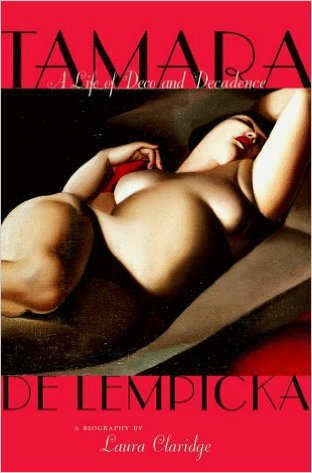
Many artists concentrated on the female figure, an important Art Deco motif. These included the erotic studies of Tamara de Lempicka, the ethereal and feminine paintings of Marie Laurenain, and the muscular nudes of Raphael Delorme, situated in bizarre two dimensional architectural settings.
Read more about the secret life of Russian aristocratic refugee, Tamara de Lempicka, details of which she had even kept from her own daughter! A fascinating biography by Laura Claridge.
Louis Icart - Parisien Chic
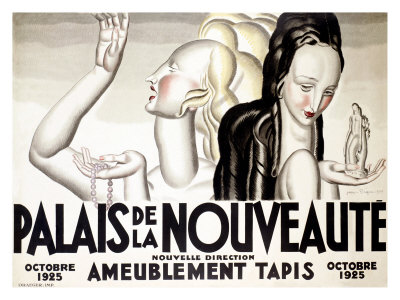
Lastly, one of the most popular Art Deco Artists, particularly in the United States, was Louis Icart. Born in France, his works captured both Parisian chic and Hollywood glamour, his models often nonchalantly holding a cigarette holder and accompanied by a greyhound or Borzoi.
His erotic paintings, lithographs, and etchings captured the risqué mood of the Art Deco era.
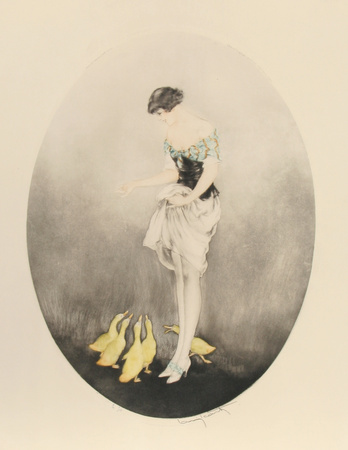
Some of these lesser Art Deco artists were, for a long time, regarded as garish or kitch. Now they are becoming better known and appreciated as they captured the Art Deco style more closely than much of the "Fine Art" of the period.
For more on Art Deco Artists click on:
Etsy has a surprisingly good range of Art Deco furniture, interior decor, art and prints, 1920s and 1930s fashion, accessories, jewellery and Bakelite. Click the banner to explore.
Join our Facebook Page so you never miss a thing!
Like this Page
- Decolish Home
- Artists
Recent Articles


-
Edward Mcknight Kauffer - Painter, Poster Artist, Rug Designer
 The Story of E. Mcknight Kauffer, a lesser known, but hugely important Art Deco poster artist. See his works and learn more. . .
 -
Art Deco Engagement Rings - We Help you Choose the Best
 Find exquisite Art Deco Engagement rings to buy for all budgets....beautiful and a great investment too.
 -
Art Deco - Antiques of the Future
 Why Art Deco Will Become Antiques Very Soon - What to Look for and How to Buy them.
Etsy has a huge range of Art Deco as well as 1920s and 1930s Fashion. Check them out!
Copyright Lesley Postle 2009-2024 Decolish.com
Privacy Policy | Affiliate Disclaimer | POWered by Solo Build It
